

 Android & iPhone
The best value of a stable currency is to redefine the way global funds flow.

Jinse Finance
Just now
On August 27, 2026, "The intersection of capital and intelligence - the launch of the CDDJAP 2026 Summer Accelerated Camp `Launch Céremony' was successfully held at three functional halls in Hong Kong Digital Port, during which a summit forum on the theme “Where Capital Meet Information” was successfully held.
The Draber Dragon partnership and the CDDJAP accelerator partner, Wang Yue Wah, were interviewed about the gold industry.
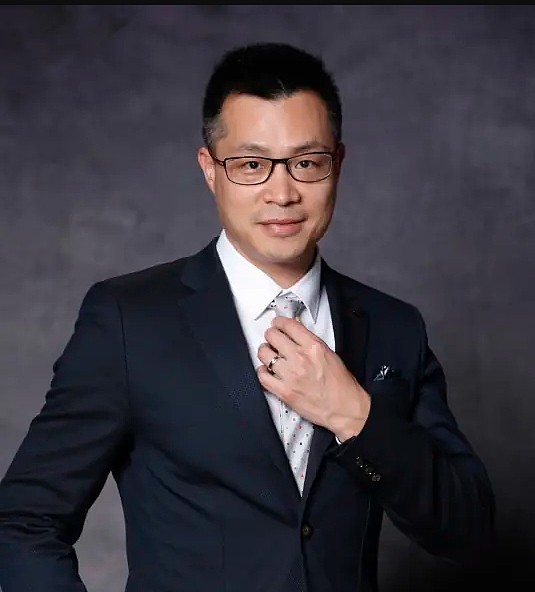
Here are some of the interviews.
In the future, the real difference between China-US AI competition is not on the Benchmark model, but on the whole AI Ecosystem. Competition in AI will show two different modes of competition: the United States continues to promote Intelligence Frontier, and China continues to push Inteligence Costa Down.
AI × Blockchain has several next interesting opportunities: AI Agent + Payment, Agent Economic; Identity, Wallet and Ownership of AI Agent; (a) Decentralized Company and Data; Verifiable AI and Privacy; I'm sorry, macho.
The maximum value of the stabilization currency is not in the encrypted market, but in redefining the way global funds flow.
In the next 5 to 10 years, there is a real chance of growing up as Google, Amazon, Anthropic, not necessarily from today's most popular track, but from companies that can become the next generation of infrastructure or platforms.
Gold finance: Draper Dragon invests long-term in early global science and technology enterprises. From the perspective of global investors, where are the biggest market opportunities in AI, Web3, block chains?
Wang Yuehua:The greatest opportunity now is not in a single AI, Web3 or block-chain track, but where several rounds of technology begin to really converge. First of all, AI, the focus has been on the big models themselves for the last two to three years, but I'm more concerned with the process of AI moving from “model capabilities” to “industrial capabilities”. In other words, opportunities will gradually extend from mere training of larger models to AI Infrastructure, algorithms, chips, data, reasoning costs, and AI Agent, Enterprise AI, Robotics and Physical AI.
This is why I think Asia, especially Taiwan, will have a very unique place in the next round of AI industries. In the past, AI’s innovation centres were more in Silicon Valley, but it really turned into products, equipment, and infrastructure requiring complete semiconductors, and hardware supply chains, which is Asia’s strength.
The second chance is at Web3 and the blockchain. The sector is moving from a phase in which the “Crypto Native” was preferred to a stage in real financial infrastructure. The most important directions in the future are Stablecoin, Payment, Tokenization and RWA. The stabilization currency has proved to be one of the largest applications of the blockchain, namely, a redefinition of global financial flows. Future cross-border payments, business settlements and Internet primary finance will increasingly be built on new digital financial infrastructure. RWA is the same. I do not think that all real-life assets require Tokenized, but financial assets — such as bonds, money market products, credit, fund shares and structured financial products — are natural for distribution, trading and settlement on block chains. The value it brings is not simply “linking up” assets, but making financial infrastructure global, real-time and programmable.
Thirdly, the most interesting thing I think about in the long run is the intersection of AI and Blockchain. AI brings in intelligence and automation, but AI Agent will be able to trade, pay, contract or manage assets independently in the future, requiring a system of identity, payment, asset and trust that machines can use in their own right, and where Blockchain is likely to become an infrastructure. So from the point of view of Draper Dragon, we are more concerned about not a short-term hotspot, but when these technologies actually move from technological innovation to industrial infrastructure.
The gold industry: the Sino-American AI competition has intensified, and where are the current core gaps in Sino-American AI development? What are their respective core strengths?
Wang Yuehua:And I think it's time to discuss the U.S.A. gap, not say that the US model is a few years ahead of China. In fact, this gap has narrowed very quickly over the past two years. From DeepSeek, we have seen that Chinese companies, even with limited calculus resources, can optimize algorithms, engineering, and modelling structures to bring model capabilities closer to the state-of-the-art in America. So the real difference in future US-China AI competition is not on the Benchmark model, but throughout AI Ecosystem. If we break AI down to a few levels, I think there are three main advantages in the US. The first is the foundational capacity for innovation at the forefront. The world ' s leading leaders, the Foundation Model, AI Research and many new model structures and technological paradigms, are still largely driven by United States companies. OpenAI, Anthropic, Google, Meta and the talent, universities, frontier laboratories and entrepreneurial ecology built around these companies are very important advantages for the United States.
The second is computing and capital. AI is a very Capital Industries industry. The United States owns core chips and infrastructure companies such as NVIDIA, AMD, Broadcom, the largest cloud computing platform in the world and the AI data centre system, along with very mature Venture Capital and capital markets. So the US can continue to invest a very large amount of capital in exploring AI Frontier.
The third is global software ecology and platform capabilities. From Claude, Devloper Towers, Enterprise Software to the Global Internet platform, American companies still hold a very strong global Distribtion.
But China also has a few unique advantages. The first is engineering capacity and cost efficiency. Because of the limitations of computing and chip resources, China’s AI companies focus on model efficiency, reasoning costs, and engineering optimization. DeepSeek is a typical case in which it is not necessarily Benchmark, who is 5% more likely to be able to use AI on a large scale, but who can reduce costs by 80%.
The second advantage is the speed of application and commercialization. China has a very large consumer market, along with a very complete industrial environment such as electricians, payments, logistics, manufacturing, automobiles, robots, etc. So an AI technology can enter real business scenes very quickly and constantly.
The third is the manufacturing and hardware industry chain. The next phase of AI will not only be in Claude. AI will gradually enter cars, robots, drones, factories, medical equipment and a variety of Edge Services. When AI moves from Geneva AI to Physical AI, China’s ability to manufacture, supply chains, robots and hardware productization becomes more important.
So the stronger thing for America is to create "Intelligence" for the next generation of AI, and China has the advantage of fast and low-cost conversion of Intelligence into Project and Scale. The United States has created a new technology paradigm, with China promoting scale applications, while the supply chains of Taiwan and Asia have turned these technologies into products that can be deployed on a large scale. The greatest investment opportunities in the future are precisely where these three capacities converge.
Gold finance: China’s big model is catching up with the big US model, and even has a tendency to be unconventional. If China’s AI model works close to the US model, but at very low cost, it could change the global industry’s competitive pattern.
Wang Yuehua:I think it is possible, and the impact could be very far-reaching. Because if China’s large model performance is close to the US, but only a part of the US model is used, the logic of competition will change. The future is not necessarily about who can make the smartest model, but who can provide enough Inteligence at the lowest cost to the most people and the most equipment.
There are three very important changes that will come in. First, AI's Intelligence will become increasingly commodification. Today we see Foundation Model as a very scarce capability, but if more and more models can reach near Frontier Model while the cost of reasoning is falling, the price of Inteligence itself will decline rapidly. It's a bit like the development of the computer industry in the past. First, it was very expensive to start with a really huge value in software, the Internet and applications that came on top as the cost of chip and cloud computing continued to decline. AI is likely to repeat the same process. So the greatest value of the future is not necessarily in Foundation Model, but may move gradually to Application, Agent, Data, Vertical AI, Robotics and Physical AI.
Second, low cost will greatly accelerate the global spread of AI. The state-of-the-art model in the United States may still be a performance leader, but most enterprises do not necessarily need the strongest model. A model that can reach 90% or 95% of the state-of-the-art model, but costs only one tenth or less, may be a better business option for many businesses. Cost Performance would be important, especially in South-East Asia, the Middle East, Latin America, Africa and a large number of SME markets. So China AI’s global competitiveness may be made available to more firms and developers around the world in the future, not by “replacement of OpenAI”, but by providing Affordable AI.
Third, change the value distribution of the whole AI industry. If models become cheaper, the real barriers to competition in the future may shift from Model to Data, Distribution, Application, Compublishing Industries and AI’s integration with real-life industries, which is why we are paying increasing attention to AI Agent, Enterprise AI, Robotics, Edge AI and Physical AI. When Intelligence gets cheaper, the most important question becomes: What are you doing with Intelligence? Those who have clients, data, scenes and industrial chains are likely to be the greatest beneficiaries of the next phase.
Of course, America still has very strong strengths, including the front-line Research, top talent, GPU, Cloud Infrastructure, and global software ecology. So it is more likely that there are two different forms of competition: the United States continues to promote Inteligence Frontier, and China continues to promote Inteligence Cost Down. From the perspective of global industrial development, both forces actually accelerate the spread of AI. If China can sustain this Costa Efficacy, it will indeed have the opportunity to redefine the global competition pattern in AI industries.
Gold finance: AI is fast moving into application, what do you think of AI and block chains? What opportunities do you see in them, for example, AI Agent, decentrized computing, intelligent economy?
Wang Yuehua:The combination of AI and Blockchain cannot be combined for the purpose of integration. AI itself does not require block chains to become smarter, and large models of training and reasoning may be more efficient in most cases using traditional centralized infrastructure. The real interesting opportunity is that when AI went from Copilot to Agent, from "Give the answer" to "Speech the representative on the mission," the Blockchain began to be very important. Because an AI Agent, if he can work on his own in the future, will have a few very basic questions: who am I? Who am I representing? What assets do I have? How much can I spend? How do I pay for the other one, Agent? How do I sign? How do I get my deal verified? Can I pay for it? The traditional Internet and banking systems are designed for “people” and “companies”, not for billions of software, Agent. And Blockchain was born with several abilities: Identity, Wallet, Assembly, Payment, Smart Contractor and Verification. So AI x Blockchain has a few next very interesting opportunities.
The first is the formation of AI Age + Payment, Argentina Economic. I believe that this is the clearest and most likely to lead in the direction of large-scale applications. In the future, Agent will buy an API, data, algorithms, software services and even hire another Agent to perform his mission. Such transactions may be only a few cents, a few cents and millions of times a day. Traditional credit cards and banking systems are not suitable for this kind of Machine-to-Machine Payment, but Stablecoin and Blockchain fit perfectly. We've seen this infrastructure come up, like an agreement like x 402, that allows software to pay for API, data and computing directly in stable currency. If this trend continues, one of Stablecoin's huge incremental user groups may not be Human but AI Agent.
The second is AI Agent's Identity, Wallet and Ownership. Today's AI Agent is basically a software in one of the platforms. But in the future Agent will have his own Wallet, authority and assets, and it will become an independent Digital Economic Enterprise. Of course, the most important issue in this is not to give AI “unlimited powers” but rather to define very precisely what it can do, what it cannot do, how it can be held responsible and what transactions require from Human Approval, through Smart Contractors and Criptography. So there's gonna be a big market for the future.
The third is Decentrazed Company and Data. AI's biggest factor of production is actually three things: power, data and algorithms. Today, these are heavily concentrated in the hands of several large technology companies, and Blockchain offers a new possibility to organize globally dispersed GPUs, storage, data and other computing resources into a Marketplace. The three assets, namely, hard-core assets, data support and algorithmic assets, could be tokenized. More active AI Economic.
The fourth is my special interest in Verifiable AI and Privacy. As AI becomes increasingly involved in financial, medical, corporate data and personal decision-making by Agent, we not only care about what answer AI gives but also what it uses. Is the data on upstream authorized? Has this data been altered? This one, Agent. Do you have permission? Is this calculation really carried out in accordance with the requirements? If not, what did Agent do wrong? Or is it a pass-through? How? So AI's Trust Infrastructure is not missing.
And finally, looking a little further, I think it's the so-called Machine Economy or Agent Economy that is most desirable. Today, the global economy is dominated by people and business. There will be a third type of Economic Actor in the future, that is, AI Agent. Agent can create value, provide services, purchase data, buy computing power, pay another Agent, or manage assets on behalf of individuals or enterprises. If there are billions or even more of Agents in the world trading with each other, they will need systems of accounts, payments, assets and settlements that will probably not be fully built on today's banking infrastructure. So AI gives the machine Inteligence, Blockchain gives the machine Identity, Ownership and Money. When AI moves from "thinking" to "acting, trading," the combination of these two technologies really begins. And the next 10 years are coming from today's Internet Economy, to an Intelligent Economy with Human, Company and AI Agent.
Gold money: Stable currency is becoming an important infrastructure linking the traditional financial and block-chain world. What are your chances for future applications?
Wang Yuehua:I believe that the best value of a stable currency is not in the Crypto market, but in redefining the way global capital flows flow. First of all, the clearest opportunity now is Payment and Cross-border Settlement. Today, cross-border payments remain problematic: they are slow, costly, have multiple middle links and very inefficient settlements between different national banking systems. Stablecoin essentially transforms the dollar into a digital asset that can be 24/7, real-time, global and programmable. Thus, whether individual remittances, cross-border power suppliers, corporate payments or cross-border trade finance settlements between emerging markets, there are clear efficiency advantages to the stabilization currency. Especially in countries where the dollar is not readily available and the banking system is underdeveloped, Stablecoin has become more than just a Cripto Produc, but rather a sort of Digital Dollar Account.
The second is B2B Payment and Global Trade. The truly huge financial flows in global trade are not paid by consumers, but between enterprises. Vendor payments, cross-border procurement, international trade settlements and Treasury Management are much larger than general consumer payments. Today, it may take two or three days for an enterprise to pay Asian suppliers from the United States, passing through multiple banks and bearing exchange rates, fees and reconciliation costs. If future firms could complete real-time settlements directly through Stablecoin, this would have a very significant impact on global trade finance. So Stablecoin's next stage of real growth is probably from Enterprise Payment, not just Consumer Payment.
The last one is Financial Market Settlement. Traditional financial markets are huge today, but their bottom-up infrastructure is still very traditional. The securities deal may be done in a few seconds, but the real Clearing and Settling often take a day or two. If future financial assets like Bond, Fund, Money Market Production and Private Credit are gradually topped up, then the stabilization currency will naturally become these assets, Cash Leg. In other words, financial markets in the future chain need two things: Tokenized Assembly + Tokenized Money. Stablecoin was TokenizedMoney. So from this point of view, Stablecoin and RWA are actually two sides of the same trend. Without Stablecoin, RWA is hard to create a truly efficient chain financial market; As more financial assets enter the Blockchain, the use of Stablecoin will also increase.
And there's a longer, but interesting, direction, that's AI Agent Economy. The future of AI Agent, if it can buy its own API, calculus, data or any other Agent service, will require a money that can be used directly by a machine. Credit cards and bank accounts are not designed for machines, but Stablecoin is. So the future users of Stablecoin may not only be billions of people, but may also include billions or even more of AI Agent. Stablecoin's really important place is not that it makes Crystal easier to trade, but that for the first time it turned Money itself into an Internet-native, programmable, Global and Real-time Infrestructure.
Gold: In the next 5 to 10 years, where do you think the next technology companies like Google, Amazon and OpenAI come from? How can investors identify these opportunities in advance?
Wang Yuehua:I think that in the next 5 to 10 years, there's a real chance to grow up as Google, Amazon, Anthropic -- not necessarily from today's most popular track, but from companies that can become the next generation of infrastructure or platforms. There are five types of opportunities that deserve attention. The first is AI Infrastructure and the next generation Compuising Platform. All you see today is big models and AI Application, but every time the paradigm changes, new infrastructure giants are born. The PC era is Intel and Microsoft, the Internet age is Google and Amazon, and the Mobile age is Apple. The AI era will also require new Compute, Chip, Data, Memoory, Networking, Inference Industries and a new Developer Platform. So I think one of the biggest companies in the future might not be a simple AI App, but rather an entire AI Economy infrastructure.
The second direction is AI Agent and the new Software Platform. Today's software is basically human-operated software. The future may become "Agent Operator" or even Agent will finish it directly. If this trend is established, today many business models such as SaaS, Seach, E-commerce, Custoller Service and even some financial services will be redefined. In the past, Google was at the heart of organizing global information, Amazon for organizing global goods and Claude Resources. There may be a company in the future that is really becoming AI Agent's Operating System, Distribution Platform or Transaction Platform. It's very likely with opportunity.
The third direction is Robotics and Physical AI. Over the last decade, AI has been mainly in Screen, and over the next decade AI will be increasingly entering Physical World. Robots, autopilots, drones, smart factories, medical equipment, household equipment are essentially AI vehicles that enter the real world from a digital world. And that's why we also think that Physical AI could be a very important wave after Generative AI. This area is of particular interest to Asian investors, not just Software, but also the deeper integration of Chip, Sensor, Motor, Battery, Manufacting and Supply Chain.
The fourth direction is a new generation of financial infrastructure. This post is part of our special coverage Global Voices Online, which includes Stablecoin, Tokenization, Blackchain Infrestructure and Machine-to-Machinical Network for the future of AI Agent. If large global assets, payments and financial transactions are digitized, real-time and programmable in the future, then a new Financial Intelligence giant will be born. Today we may see Stablecoin as a Crypto product, but soon it may be more like Visa, SWIFT or Cloud Infrastructure today.
Fifthly, there is also a big direction for AI to interact with traditional industries like life sciences, energy, and new materials. The real long-term value of AI is not just to write articles or codes for us, but to shorten the development cycle of new drugs, improve energy efficiency, discover new materials, and improve manufacturing efficiency.
But the real problem for investors is not to know these directions, but to find them before they become consensus. I usually see a few things myself. The first is to watch Cost Curve. Before the emergence of many great technology companies, industry often began with a turning point where basic capacity costs were rapidly declining. Internet is Bandwidth to be cheaper, Claude to being computing to be cheap, Mobile to be Sensor and Chip to be cheap. What we see today is that the costs of Inteligence/AI are falling rapidly. When a very expensive capacity is suddenly 10 times cheaper, 100 times cheaper, new products and companies that were not possible in the past tend to emerge. The second is to look at Bottleneck. Every technological revolution creates new bottlenecks. The stronger AI, the greater the demand for GPU, Energy, Memoory, Data, Networking, and Security. So we ask, if this trend increases 100 times, what will not be enough? A lot of big opportunities, right on these Bottlenecks. The third one is Technology Convergence. For example: AI x Semiconductor, AI x Robotics, AI x Blockchain, AI x Healthcare, AI x Manufacturing, because many innovations are not from one technology per se but can be combined with two sophisticated technologies. And the fourth, and I think VC's most important ability is to be willing to believe in good Founder when there is no consensus on the market. The companies that really became Google, Amazon or Anthropic were not usually the safest investments in the early days. They are often too early, too strange and even at the beginning they cannot see business models. So venture capital is essentially not about predicting which industry will grow, but about finding those who see the future sooner than the market and who are able to make it. So we invest in the future.

 2

Declaration: This is a gold original, the copyright is a gold one and cannot be reproduced without authorization. A copy of this article must be downloaded from an agreed-upon medium with the indication "Source: Gold Book", for which the offender will be held liable under the law.
This information is not a financial investment proposal.
 Save



- Pantera's latest status report on monetization.
- What game is AAVE playing next?
- US SEC issues an update of the crypto asset FAQ to add a new issuer's currency buyback definition
- QNT surged over 300% a week, currency deposits infiltrated the core of the United States banking system?
- Vitalik's latest post: The Ether Workshop will become a password-based world computer.
24-hour text


 Eight hidden details of Anthropic's book.
GenAI Summit
 Bitcoin goes into shock and waits for a new catalyst?
Knight of the Zone Chain.
 How did the harvest line at the Meme Factory come out of the water, Robinwood Chain?
Chain catcher ChainCatcher

- Seeking coverage
- Jinse Finance AppiOS & Android
- Community
Telegram - Feedback
- Back to Top
- Back to Bottom