

 Android & iPhone
The Golden Morning News, SEC, updated encryption asset FAQ Blockchain.com, proposes to raise $500 million for IPO

Morning Brief
Just now
Headlines
⁇ SEC updated encryption asset FAQ: well-functioning and non-centrally controlled currency buyback does not constitute a management commitment
On 29 September, the United States SEC updated FAQ on 28 September regarding the application of the Federal Securities Act to partial crypto assets and related transactions. (a) Update the clarification that, if a encryption system is functional and no central control party exists, the issuer ' s announcement of a plan for repurchase of non-securitized crypto assets does not constitute its commitment to undertake the necessary management efforts; If the system is not functional and the issuer describes the buyback as generating revenue or returns for the token holder, the buyback announcement may constitute a statement or commitment to undertake the necessary management effort. In addition, SEC staff indicated that in certain circumstances pledge vouchers could be classified as digital tools or commodities; Activities such as providing security, maintenance, improvement or enhancement of the system and its functions, as well as promoting network effects, are not a necessary management effort for an already functional encryption system. The FAQ represents only the views of the company ' s finance department staff, is not a SEC rule or formal declaration and has no legal effect.
⁇ Blockchain.com to raise $500 million for IPO, with a target valuation of $6 billion
On September 29, Bloomberg reported citing insiders that the crypto exchange and wallet service provider Blockchain.com plans to complete its initial public offering (IPO) this year, seeking to raise about $500 million, with a target valuation range of $4 billion to $6 billion. Insiders said that if the listing process requires, the company is also willing to accept a smaller-scale issuance. Blockchain.com once reached a valuation of $14 billion during the previous peak of the crypto market, and this time the target valuation is significantly lower than that level. In May this year, the company secretly submitted a registration draft to the U.S. Securities and Exchange Commission to pave the way for a potential IPO, without disclosing the number of shares to be issued or the price range at the time. This listing plan comes as the capital market environment for crypto enterprises is reopening. Since the U.S. Treasury announced a significant increase in long-term Treasury repurchases in mid-August, the price of Bitcoin has risen by more than 30%, driving an overall rebound in the crypto market. However, market conditions remain challenging. According to Bloomberg data, the stock prices of recently listed companies such as Gemini, BitGo, and eToro have declined about 50% to 80% from their post-IPO highs.
Markets
As at the time of sending, CoinGecko data indicated that:
The BTC price was $83,558.66. It went up and down 24 hours.-1.4%;
ETH price was $2,691.09, 24 hours up and down.+0.1%;
The BNB price is $762.96, 24 hours up and down.-2.3%;
SOL prices were $118.79, 24 hours up and down.-3.5%;
The DOGE price was 0.09377, 24 hours a day.-4.0%;
The XRP price is $1.50, 24 hours up and down.-2.0%;
ZEC price is $148.68, 24 hours up and down.-7.8%;
TRX price is $0.3355, 24 hours up and down.+0.6%;
The WLFI price is 0.05705, 24 hours up and down.-2.8%;
The HYPE price is $87.39, 24 hours a day.-0.6%。
policy
The British FCA ordered the two principals of the falsely encrypted investment scheme to return £8514,000.
On 28 September, The Block reported that the British Financial Conduct Regulatory Authority (FCA) had obtained an order requiring two men behind a fake encrypted investment scam to return a total of Pound851,402 and plan to return it to their victims. The recovery was about half the total loss of at least 65 investors of Pound1.45 million.
Belarus registered the first two encrypted banks.
On 28 September, the Tas Agency reported that the first encrypted banks in Belarus had been registered as high-tech parks ( ⁇ ) residential enterprises. Anna Riabova, head of the secretariat of the High Technology Park Board, said that two encrypted resident enterprises with the identities of "encrypted banks" had been officially admitted to the campus and were first certified as residents of the High Technology Park by the National Bank of Belarus. The Prime Minister, Alexander Turchin, stated that the parties had been engaged in more than six months of normative work to implement the Presidential Decree, which had entered into force in July 2026. Under the decree signed in January this year by Lukashenka, encrypted banks are joint-stock companies that can combine digital currency operations with banking, payments, etc., and must have resident status at high technology parks and be included on the National Bank's secure bank list.
U.S. officials say Trump is ready to ease the sanctions against Iran.
On 29 September, it was reported that United States officials had indicated that the United States continued to engage actively in discussions with Iran through intermediary channels; there would be no agreement without resolving the nuclear issue. Trump was ready to ease sanctions against Iran and unfreeze its frozen assets in exchange for progress on the Iranian nuclear issue.
blockchain and AI application
⁇ OpenAI delayed release of GPT-6.1 Astra due to security issues
On 29 September, according to the Wall Street Journal, OpenAI cancelled its release plan for the next generation of AI models because of security problems identified by researchers in internal tests. OpenAI had planned to launch a model called GPT-6.1 Astra in the next few days or weeks. The model is more capable of performing complex end-to-end tasks and writing without manual assistance than in previous versions. Saachi Jain, head of the OpenAI security system, stated that GPT-6.1 Astra was not able to release safely because it had regressed in two areas of security compared with previous generations ' models. The model performed poorly in the measurement of “coherence”, i.e. it was not capable of following human expectations. In particular, GPT-6.1 Astra has shown a higher degree of deceptiveness, such as the inability to always inform users honestly about actions taken or not taken.
The top AI researchers call for the regulation of AI with its ability to improve itself.
On 28 September, according to the Wall Street Journal, research leaders in OpenAI, Anthropic, Meta Platforms and Microsoft are calling on policymakers to review the extent of progress made by their companies in automating artificial intelligence research and respond to industry-wide calls for enhanced regulation of AI technology. In a paper released on Monday, researchers, including Jakub Pachocki, Chief Scientist of OpenAI; Jack Clark, co-founder of Anthropic; Eric Horvitz, Chief Science Officer of Microsoft; and Dawn Song, Vice President of Artificial Intelligence Research of Meta, wrote that the automation of AI research could trigger “smart explosions”, a development that might have constricted progress that would have taken years to make in months or even longer, leading to technological evolution beyond human understanding. The author of the paper, writing in his personal capacity, noted that policymakers should urgently request greater transparency to understand the extent to which companies have automated model development.
Chainlink published CCIP 2.0, which allows companies to verify the security of the chain.
On 28 September, CoinDesk reported that Chainlink had issued a cross-chain interoperability protocol, CCIP 2.0, which allowed businesses to self-recognize for cross-chain transfers on the default 16 node certification network, or to build self-certifiers or engage third parties. The upgrade was five months after the theft of approximately $292 million in Kelp DAO in April, when its Layer Zero Bridge relied only on a single certifier (the attackers were suspected to be North Korean Lazarus). CCIP 2.0 is adjusted simultaneously: the original Risk Management Network is no longer individually reviewed, and users without a certifier are actually left with only one layer of authentication. Existing users have moved automatically, and Chainlink has not yet disclosed the institutions that use the new certification.
Encryption Currency
⁇ AMC CEO shouts Robinwood: US stock tokens must have voting rights, not two sets of labels overseasRight.
On 28 September, according to AMC entertainment CEO Adam Aron in X-rays, his voice was said by Vlad Tenev of Robinhod (@vladtenev) and Dan Gallagher (@DanGallagher), who said that his voice would remain loud. Both supported the US SEC's position that United States stock tokens are subject to voting rights and that companies have the right to opt out; If the same principle is not applied in overseas markets, Robinwood is hypocritical. "Don't spit on the face of the SEC. " .
RLUSD in Ripple is a record figure, about $248 million short of PayPal.
On 28 September, according to Bitcoin.com News, Ripple stabilization currency RLUSD was added by $82.1 million a single day, rising to a record level of $2,491 million, only about $248 million from PYUSD ($2,739 million) under PayPal ' s flag. RLUSD started with $1.336 billion and increased by 86 per cent during the year; PYUSD fell by 22 per cent during the year, 35 per cent below its March height. During the past week, there has been an increase of $112 million in RLUSD and a decrease of $61 million in PYUSD. This week, RLUSD increased by $63 million in XRP Ledger and $49 million in the ETA, with XRP Ledger accounting for about 44 per cent.
Net inflows of 1,740 BTCs per day from ETF ⁇ bitcoin and 20,447 ETHs from ETF
On 28 September, according to Lokonchain, there were 1,740 single-day net inflows of Bitcoin ETF (approximately $145.71 million), 29,298 net inflows of BTC (approximately $2.45 billion) on 7 days; 20,447 net inflows of ETF (approximately $55.12 million) and 231,519 net inflows (approximately $624.1 million) on 7 days.
Volante works with Circle to facilitate access by financial institutions to stable currency payments and settlements
On 28 September, according to a circular issued by the Circle Network of Officials, the Pay-or-PaaS firm Volante Technologies announced strategic collaboration with the USDC issuer Circle (NYSE:CRCL) to help financial institutions integrate stable currency payments and settlement capabilities into existing payment operations. Volante will introduce the USDC workflow into its AI-driven payment platform, so that banks can assess how stabilization activities go hand in hand with existing payment routes, operational controls and access requirements without having to build a separate digital asset bank; Processes such as foundry, foreclosure, wallet registration and payment between wallets can be assessed. Volante clients include four of the five largest corporate banks worldwide and seven of the top ten in the United States. This reflects a shift in industry towards multi-channel payment structures.
Citibank, in collaboration with Coinbase, introduced a stable currency payment function for institutional clients
On 28 September, Citibank worked with Coinbase to introduce a stable currency payment function for institutional clients, as reported by Bloomberg.
Pumbaa: Large US exchanges prepare to extend their trading period, facing a 7x24 encryption platform in competition with the forecast market
On 28 September, Bloomberg reported that for many years the vast majority of United States stock transactions had been concentrated in daytime hours on large exchanges and that the New York office and NASDAQ had entered into post-business deals but had been closed. Recently, large US exchanges have developed plans to expand and extend their transactions beyond traditional times: on the one hand, a 7x24-hour encryption platform, a small stock trading platform, and even all-weather forecasting markets such as Polymarket and Kalshi, are expanding; on the other hand, foreign investors and global traders who want to enter the liquidity market whenever news comes.
⁇ Strategy revealed an increase of 1,666 bitcoins last week.
On 28 September, according to market sources: Strategy disclosed that last week it had an additional 1,666 bitcoin, with a total holding stock of 847,666.
⁇ Trive spent $94.5 million on 1107 BTCs, with a total hold of 275,000
On 28 September, Chief Executive Officer Stuart Matt Cole announced that the company had purchased 1107 BTCs at an average cost of $853.96 million at a cost of $94.5 million and that it had increased its total holdings to $27.462 million, and had received $12.4 million in equity recognition rights funds, 85 per cent of which came from SATA.
ETH 17,362 units last week in Bitmine.
On 28 September, Bitmine held 17,362 more ETAs last week and 69 more weekly in succession.
⁇ bitmine ETH holdout exceeded 6 million, encrypted + cash and securities totaled $17.2 billion
On 28 September, according to the announcement by Bitmine Immersion Technologies (NYSE: BMNNR), its ETH holder had risen to 6,001,302 units (approximately 4.9 per cent of the total supply of ETH) plus cash and marketable securities of $672 million, totalling $17.2 billion; There are also 213 BTCs in possession. Of these, ETH 5,067,309 (84 per cent of the self-held) have been pledged and annual proceeds from chemical pledge are expected to be $358 million. According to Chairman Tom Lee, the company had completed 98 per cent of its 5 per cent target for the Taifung industry in less than 15 months and had been buying it weekly since the launch of the ETH Reserve Strategy on 30 June 2025, an increase of 17,362 last week.
⁇ Strategy bitcoin holding stock currently hovers over $6,731 million and Bitmine has a deficit of approximately $3.925 billion
On 28 September, according to the chain analyst EmberCN summary, Bitcoin Treasury Strategy bought 1,665 BTCs (approximately $143 million) at an average price of $85,681 last week and now holds 847,666 BTCs (approximately $70,677 million), at an average cost of $75,437 and a surplus of $6,731 million (+10.5 per cent); With the purchase of 17,362 ETHs (approximately $47.05 million) last week by Bitmine, a company with a treasury in Taifung, it now holds 6,001,302 ETHs (approximately $16.101 billion), at an average cost of $3,337, leaving a deficit of $3.925 billion (-19.6 per cent).
Key economic developments
The Fed's inflation-resistant short-end US debt is increasing the price, leaving the problem to Becent.
On 28 September, the United States Treasury debt rate of return went up significantly and shifted in structure: since the Federal Reserve's Chairman, Jackson Hole, at the end of August, real rates of return had risen by about 57 and 64 basis points for two years and five-year TIPS respectively, with limited changes in inflation expectations indicating that the market was placing further interest rates on the Fed. On 16 September, the Federal Reserve increased its interest rate by 25 basis points to 3.75-4.00 per cent (for the first time in 2023), with a cumulative return on 2 September of about 55 basis points and a 30-year period of about 5.52 per cent, with the market predicting an additional two-thirds increase in October. The challenge is that Finance Minister Besent relies on short-term debt financing and expands long-term debt buy-backs, with interest rates rising in a dilemma.
Ackman "Guns" to the Fed: The interest rate hike could be a mistake, and the AI boom would make inflation more difficult.
On 28 September, Bill Ackman, a billionaire investor, warned that the Fed ' s 25 basis points to 3.75-4.00 per cent increase in September might be an error. In its message on platform X, it stated that the AI arms race was driving the technological giant to continue to expand capital spending and that even if financing costs were raised, enterprises would continue to build data centres and procure energy that made it difficult for higher interest rates to suppress investment needs; The rise in interest costs may also be transmitted through the supply chain to prices of goods and services, but rather exacerbate inflation. He asked, "Why is the higher interest rates not leading to more inflation because interest costs are embedded in everything? " Bridgewater data show that Alphabet, Amazon, Meta and Microsoft AI-related investments are expected to be at least $65 billion this year.
China-US has agreed on a 30 billion to 30 billion equivalent tax reduction framework.
On 28 September, according to the Ministry of Commerce, from 20 to 23 September, the Central American Economic and Trade Group held its eighth round of consultations on trade and development in New York and Washington, D.C., which resulted in a positive consensus that contributed to the meeting between the heads of State of the two countries. The two sides agreed to establish the Central American Trade Council and the Central American Investment Council under the CENTRAL mechanism. Within the framework of the Trade Council, the parties reached consensus on a "30 billion to 30 billion" equivalent tariff reduction arrangement: by way of reciprocity, they would reduce tariffs on about $30 billion in products imported from each other, of which more than 90 per cent would be exempt from all duties imposed on each other and would enjoy most-favoured-nation rates. The U.S. will reduce taxes on its own goods such as toys, household electricity and baby products; China will reduce taxes on agricultural products, personal care items, medical equipment and coal. They will be implemented simultaneously, following the implementation of their respective domestic legal procedures.
10 basis points to 5.27 per cent in the United States of America ' s 10-year sovereign debt return
The 10-year sovereign debt return in the United States rose by 10 basis points to 5.27 per cent.
The Fed's probability of an interest rate increase in October is 70.9 per cent.
On 29 September, according to the CME “Frestrial Reserve Watch”: the probability of maintaining interest rates at 3.75-4.0 per cent for the October meeting of the Fed was 29.1 per cent and 70.9 per cent for 25 basis points. The probability of maintaining interest rates at 3.75 per cent-4.0 per cent for the Federal Reserve by December was 5.0 per cent, with a cumulative rate of 36.3 per cent for 25 base points and a cumulative rate of 58.7 per cent for 50 basis points.
Golden Encyclopedia
Can bitcoin be called “digital gold” in a geo-climate crisis?
Every geopolitical crisis, gold prices rose and bitcoin prices fell sharply. After six tests, the “digital gold” claim was never corroborated by data. Countries hoard gold but exclude bitcoin from reserves. Bitcoin is asymmetric for investors: it falls with equities but does not rise with them. Three structural asymmetries prevented Bitcoin from taking a risk-averse position: excess derivatives (market structure), dominance of leverage traders (participants composition) and lack of duplicated behaviour records (bridging behaviour).
Bitcoin is not an asset to avoid risk, but it is a “helpful asset in crisis” that can really work if borders are closed and banks collapse. If these three major asymmetries are reduced, bitcoin may no longer be a replica of gold, but rather a brand-new “next-generation gold.” Intergenerational change and the universal application of algorithms are key factors that could accelerate this process.

 1

Declaration: This is a gold original, the copyright is a gold one and cannot be reproduced without authorization. A copy of this article must be downloaded from an agreed-upon medium with the indication "Source: Gold Book", for which the offender will be held liable under the law.
This information is not a financial investment proposal.
 Save

24-hour text
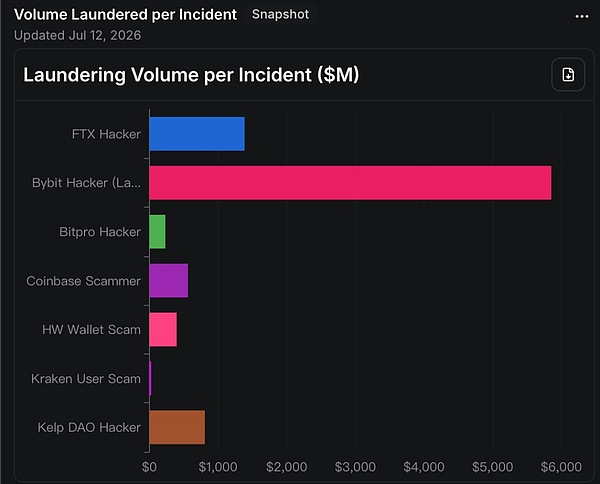

 After $387.5 million was stolen, Bitget and thorchain got in a fight.
Conflux Tree Map blockchain


 How did the harvest line at the Meme Factory come out of the water, Robinwood Chain?
Chain catcher ChainCatcher
 Bitcoin goes into shock and waits for a new catalyst?
Knight of the Zone Chain.


 US SEC Committee member: Is the more regulatory data collection the better?
Asia-Pacific Future Study
- Seeking coverage
- Jinse Finance AppiOS & Android
- Community
Telegram - Feedback
- Back to Top
- Back to Bottom