

 Android & iPhone
The Federal Reserve Cook is calling again: "Ai's short-term price-fixing, counter-inflation new pusher."

Kim Xian data
Just now
Author: Joo, Kim Xian Data
The Federal Reserve Board member Lisa Cook stated that productivity gains brought about by artificial intelligence could help to reduce inflation in the coming years, but in the short term would not be sufficient to offset the price pressures of AI’s expansion.She warned that the development of artificial intelligence infrastructure was increasing competition for shared resources, such as energy and construction labour, which could contribute to broader inflationary pressures.
In his speech on Monday at an event in Auckland, California, Cook said: “Now, I expect productivity gains to yield moderate inflation fallbacks over the next few years. But I do not think that these effects will occur in time to offset the growing inflationary pressures later this year.”
She stated that the Fed’s decision to raise interest rates this month was due to continued inflation overstretching. Future policy adjustments will still depend on economic data performance.
Cook’s statement reflects that the Fed’s internal judgement of artificial intelligence affecting the economy is becoming more complex.
Before, there was a general concern in the market that AI might eventually ease inflationary pressures by increasing labour productivity and lowering business costs. But Cook believes that productivity gains take time to reflect them.The current phase of AI infrastructure expansion has itself brought new demands.
She noted that investments in large-scale data centres were increasing competition for resources, such as energy and construction labour.Over the past year, electricity and water costs have risen by about 5 per cent, while businesses have announced capital investment plans of approximately $2 trillion in AI, with only a portion of the funds currently actually being landed.
Cook also mentioned that AI-driven stock increases could also affect consumer demand through wealth effects, further increasing price pressures in the economy.
In her view, the productivity improvements that would be brought about by AI in the future might have an inflationary effect, but there was still considerable uncertainty as to when and how far this mechanism would affect it, which required further study.
This month, the Fed increased its base rate by 25 basis points, increasing it to 3.75 to 4.00% between policy interest rates. According to recent economic projections, the Fed’s median expectations suggest that there may still be at least one increase before the end of the year.
Federal Reserve Chairman Kevin Walsh had previously indicated that the operation was aimed at “dismantling a dose of easing” from the economy in order to drive inflation back to its target level of 2 per cent.
Inflationary risks have also been consistently emphasized by a number of Fed officials in recent times. Federal Reserve Chairman Thomas Barkin has previously stated that US economic activity remains resilient, that inflationary pressures are no longer limited to energy and tariff shocks, and that strong demand is beginning to work.
Market expectations for further interest rate hikes have also risen.The data show that Federal Fund futures transactions reflect the market ' s probability of increasing interest again by about 70 per cent in October.
Cook indicated that the United States labour market was currently able to withstand a higher interest rate environment.She noted that the unemployment rate had recently declined and other indicators showed that the job market was largely balanced and was gradually improving.
At the same time, she argued that labour market resilience was also reflected in broader economic data and that the United States economy had maintained a strong growth momentum over the past year.
The central issue facing the Fed today is how to judge the ultimate impact of the AI investment cycle on the economy. If productivity increases are realized quickly, it may help to reduce inflation and increase potential growth; but if investment expansion starts with higher energy, equipment, and labour costs, policy pressure may increase in the short term.

 0

Statement: The present paper was written by the author of the gold-based financial estate, whose views are expressed only on behalf of the author and in no way represents the gold-based financial system which shares his view or confirms his description.
This information is not a financial investment proposal.
 Save


- The Federal Reserve Cook is calling again: "Ai's short-term price-fixing, counter-inflation new pusher."
- Trump rejected Iran's proposal and called it this week: the nuclear issue is the key to restarting negotiations.
- The United States debt was hit by a perfect storm: strong data, hawk-based Feds and weak label sales.
- As Trump threatened to destroy Iran, Me and New York were talking for three hours: the two sides will meet again soon.
- Another Fed official put a hawk in it: might need more interest rates to contain inflation.
24-hour text
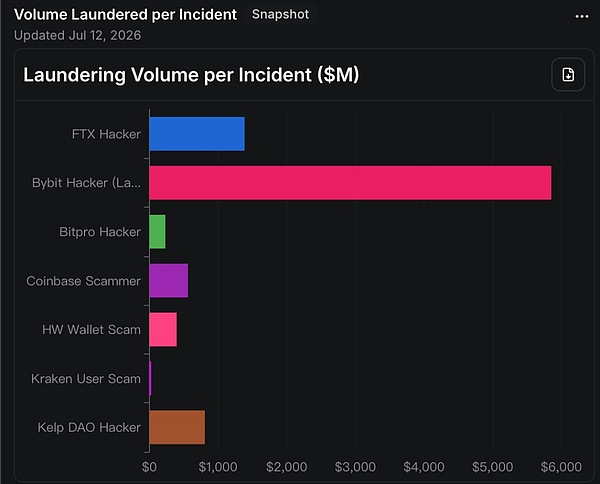


 After $387.5 million was stolen, Bitget and thorchain got in a fight.
Conflux Tree Map blockchain



 How did the harvest line at the Meme Factory come out of the water, Robinwood Chain?
Chain catcher ChainCatcher
 Bitcoin goes into shock and waits for a new catalyst?
Knight of the Zone Chain.


 US SEC Committee member: Is the more regulatory data collection the better?
Asia-Pacific Future Study
- Seeking coverage
- Jinse Finance AppiOS & Android
- Community
Telegram - Feedback
- Back to Top
- Back to Bottom