

 Android & iPhone
Why has the encryption option never developed?

Gold selection.
8 h ago 100K
Author:D; Source: X,@domdOsu; compiled: Shaw, Gold Business
Pasifaging is one of the most powerful financial instruments in the traditional financial system, as well as the type favoured by bulk speculation. Yet, despite the fact that United States options are continuously being traded at new levels, the needs of chain traders and users in much of the world outside the United States have not been adequately met for a long time.
In the United States, market options are in excess of $3 trillion a day. And DeFiLlama counts all chain-up options, with only $4.3 billion in nominal terms over the past 30 days.
The chain traders are becoming aware of the central advantages of options in the United States diaspora market:The option leverages without risk; the downside loss locks, with a strong yield; and the possibility of speculation directly on the volatility rate itself and of using more leverage over longer periods of time.
For many years, the original encryption team has not been able to create a single option that can absorb the volume of speculation in bulk.The encryption industry’s products are generally eager to be fully applied, with all the features of the same platform, such as cash, contract renewal, financial borrowing, options, etc. The cost of trying to cover all business is that any single block would be extremely difficult to achieve.
I like to use a metaphor: a menu with hundreds of dishes compared to three dishes and a small store with a queuing line. The former wants to serve everyone, and none of them has the highest level of expertise; the latter plows down a few items, then expands on their own advantage.
This is the logic of making good products. Focus on one thing, grinding the whole chain experience until it's perfect to gain user confidence; then be eligible for an iterative and scalding basis.PeriodIn order for power to be mainstreamed and for it to thrive in a chain-trading community, core products must do three things: pricing and liquidity, asset screening and fast-tracking, and simple visual user experience.
Pricing and liquidity
Most of the traditional chain-up options markets follow the same model:Building order books, attracting marketers and directing mobility from zero to support buyers' and sellers' transactionsIt's no problem to take a rough look at this logic.
The core pain is that options mobility is born to be unscalable.. In the DEX, a standard type of object is essentially one market; but in the options market, the liquidity of the same item is spread among dozens of portfolio and maturity contracts, each of which requires continuous pricing and liquidity support. A bottom-up asset will soon produce hundreds of separate trades.
Each new asset is further compounded. Marketers need to price the entire contract, manage a portfolio of options risk indicators and volatility exposures, hedge risks as markets evolve, and allocate capital to support the business package.
In traditional financial markets, zero DTE (expiring rights) has become the dominant tool for traders to express short-term views. In July 2026, the standard 500 (SPX) 0DTEs together accounted for about 66.2% of total options transactions.
There is also a problem with the flow of transactions itself. Marketers on open platforms must anticipate that the counterparty may be an information advantage or a professional trader. They will include reverse selection risks in their offers, especially short-term options, and losses will accumulate quickly if miscalculated.It is precisely where there is the greatest concentration of speculative demand in the diaspora that offers are conservative. The bulk of the diaspora prefers short-term directional openings, but the existing chain-based market structure makes it difficult for such contracts to provide competitive liquidity.
The order book-based options platform is therefore facing fundamental trade-offs.: Supporting short-term contracts and assets will further exacerbate the fragmentation of liquidity; however, if assets are not adequately covered, it will be difficult for the platform to attract encrypted traders who migrate to a new platform for speculative opportunities.
Asset screening
Traders rarely change platforms simply to trade existing varieties. What attracts them to migrate is the subject of transactions that are not available elsewhere.Speculative speculation is driven by sudden events: news breaking, new currency going online, volatile asset prices, and speculative demand almost instantaneously. Dealers want to be in the field immediately, able to seize opportunities and quickly provide a platform for opening up, so they can retain their customers.
Hyperliquid had eaten it for a long time, went to markets that could not be traded anywhere else, and the new asset itself became a source of access.The HIP-3 market now follows the same pattern. When traditional crude oil futures are closed, geo-news break out, chained crude oil markets become a few places where market views can be expressed immediately.
For speculative markets, timeliness itself is a part of the product.Long-tail assets and specialty varieties are key to the audience: they create hot spots, attract new users and prove that the platform understands the real needs of traders; mainstream assets retain users and generate a continuous volume of transactions.
But the existing options infrastructure makes this strategy extremely difficult. By relying on a fragmentation order book, it is not possible to quickly create an adequately liquid option market for each hotspot asset.
User experience difficulty
The user experience of options, covering both ends of the market。The interface itself is not an obstacle to a professional trader.They can understand the options chain, understand the options risk indicators, and build their own trading strategies. But when large amounts of transactional transactions are needed, and deep liquidity is required, transaction processes tend to move away from the product itself into communication at Telegram and off-site counters.
New traders face the opposite.: Before simply expressing a market view, the complex set of concepts - options chains, power grids, trade price differentials, implied volatility, Greek values, maturity times, contractual rules – is to be confronted.
One end user can have a deal, but the process is old and cumbersome; the other end user can use the product, but the interface is redundant. Most traders are unable to balance both. Dealers should not choose one: either they have an institutional level but rely on a manual process, or self-help operations need to deal with complex layers of concepts.The opportunity for employment lies in the integration of both: institutional mobility and capacity to trade, with a simple interface that can be used by ordinary people.

 0

Declaration: This is a gold original, the copyright is a gold one and cannot be reproduced without authorization. A copy of this article must be downloaded from an agreed-upon medium with the indication "Source: Gold Book", for which the offender will be held liable under the law.
This information is not a financial investment proposal.
 Save

24-hour text
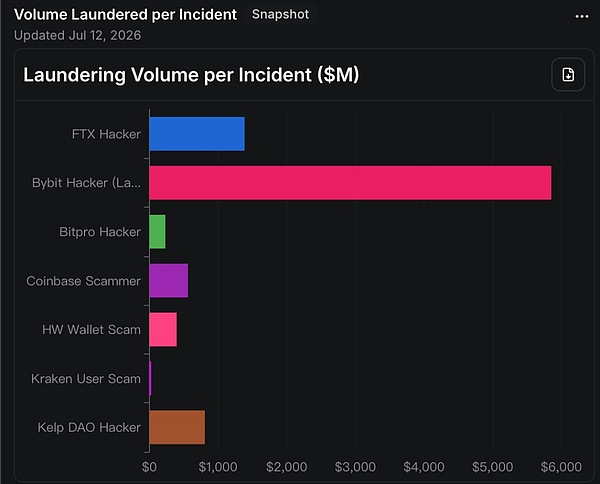


 After $387.5 million was stolen, Bitget and thorchain got in a fight.
Conflux Tree Map blockchain


 How did the harvest line at the Meme Factory come out of the water, Robinwood Chain?
Chain catcher ChainCatcher
 Bitcoin goes into shock and waits for a new catalyst?
Knight of the Zone Chain.

 US SEC Committee member: Is the more regulatory data collection the better?
Asia-Pacific Future Study
- Seeking coverage
- Jinse Finance AppiOS & Android
- Community
Telegram - Feedback
- Back to Top
- Back to Bottom
Encryption technology, web3 is a front-line technology that needs more attention.