

 Android & iPhone
Bankless Co-founder: Who Is Buying ZEC and NEAR?

Jinse Finance
2026/09/24 10:55 100K
Source:Bankless is a co-founder of David Hoffman.;compiled: gold finance
"How the fuck did ZEC get so high?"
"Where the hell did you get this infinity buy?"
"How can an asset go from $200 million to $26 billion without being manipulated?"
In the encrypted world, every once in a while, an asset wins the Bitcoin Buyer trophy.
Bitcoin followers have always covered their BTC. The power of the Bitcoin community and its narratives have shaped an extremely powerful Schelling point, and it has worked. This effect is now 1.7 trillion dollars in volume.
This line is almost never broken. Those who defect to other assets, the Bitcoin followers, are humiliated, ridiculed and rejected.Bitcoin has only one rule: no junk currency. The second rule is that all but bitcoins are trash coins.
But unfortunately, the Bitcoin believers are also human. They can't escape temptation, jealousy and greed. The Bitcoiners in the streets, shitcoiner in the Sheets.
Usually, the Bitcoin followers are a deserter without attention or concern. But occasionally, when there are enough defectors to the same asset, defections become contagious.
That's what happened in ETH in 2021. That explains why ETH went through such a dramatic re-evaluation -- from $12 billion at the bottom to $554 billion at the top.
Listen. Su Zhu said it in October 2021.:
"It has reached this point: I know people who fly around the world to move bitcoin out of their cold wallets to buy ETH. If your sign is a bitcoin extremist on Twitter, you can't give up publicly because you're gonna fall powder, but I'm pretty sure many of these people hold a lot of ETH in private, really."
- Su Zhu, October 2021
ZEC in 2026 is the Eth in 2021.
ZEC has created a strong enough Shellin point for the Bitcoin Buyer.
There are 1.7 trillion United States dollars in BTC outside, and only a few bitcoin followers accept that ZEC is reasonable -- whether because it has its own advantages (privacy, resistance) or simply as a hedge of its BTC position.
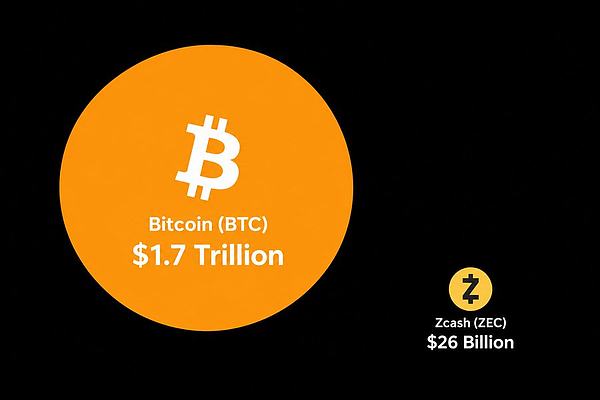
So that's why ZEC would keep going up.An asset with a market value of $26 billion, compared to 1.7 trillion, is still only a dime, and enough as long as ZEC convinces even a small fraction of the Bitcoin believers that they should have "a little bit" ZEC, just in case."And "just in case" is exactly what the Bitcoin believers used to persuade the rest of the world to hold BTC.
It doesn't matter how much dollars ZEC has gone up. What matters is the size of ZEC versus BTC, which is not the size of the BTC.Because driving ZEC behind the buy is bitcoin's wealth.
If I'm wrong, correct me, but I see that few funders on the market skip BTC, ETH and all other crypto assets simply because of ZEC’s own merits.
NEAR is the new Sherling Point of the smart contract.
I believe that something similar is happening to the NEAR.
I think that Near won the 2026 Smart Contract Buyer trophy.
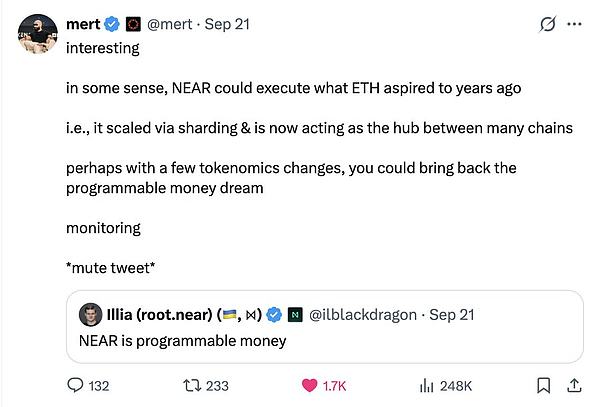
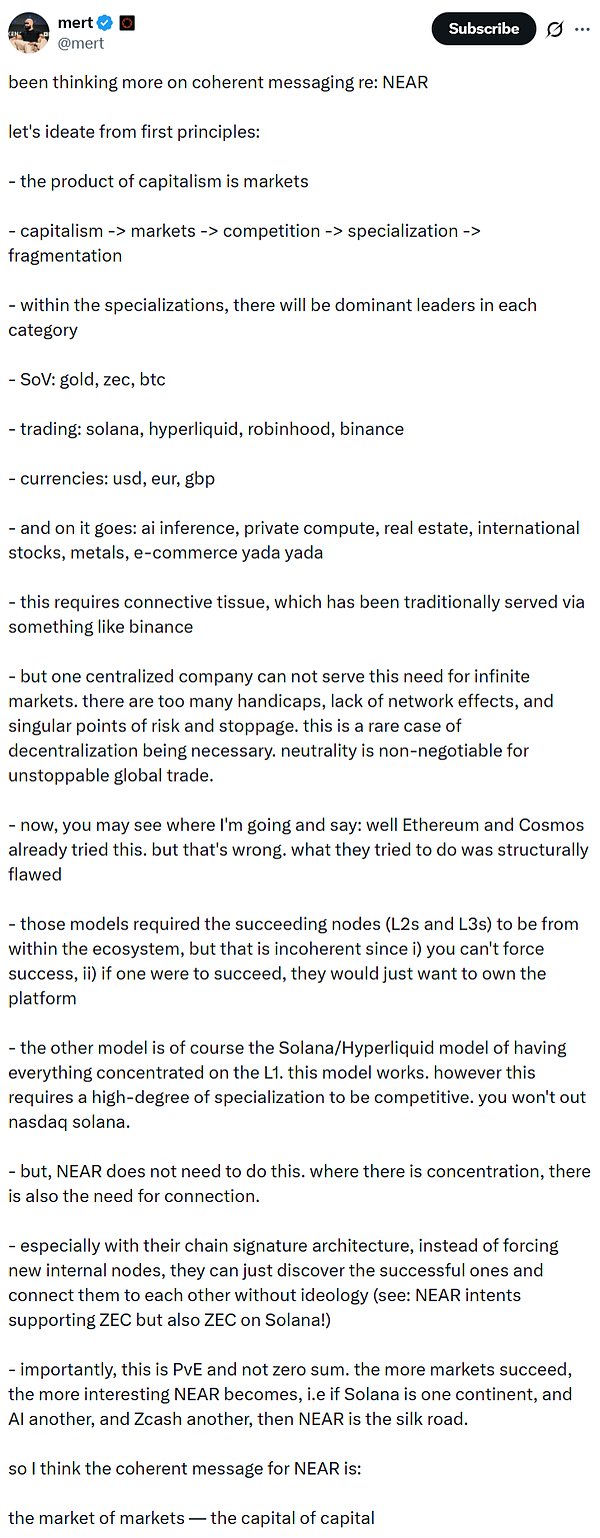 NEAR is competing for a smart contract purchase, which is clearly weaker than ZEC's hard-core bitcoin buy.
In the world of encryption, it's always the first store of value and second in the chain of smart contracts.
ETH's control over smart contract trophys has been weaker than the BTC's control over value storage trophies. SOL’s threat to ETH is greater than anything ever has been to the BTC. The culture of the Taicha is always more loose, more inclusive, and more than the extremists in the TTs can tolerate.
So the NEAR buys probably come from a more dispersed group of market participants than ZEC’s bitcoin followers. But nevertheless, the effect is the same.
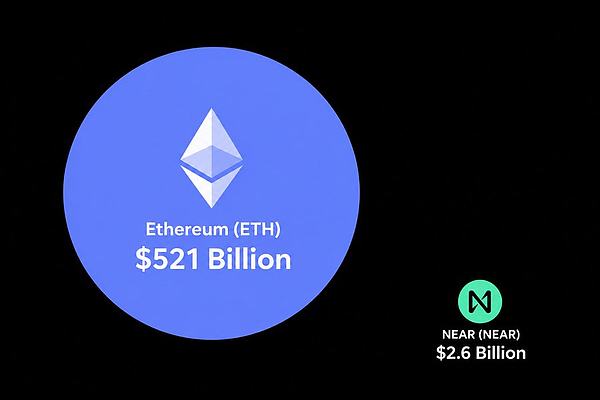 There are fewer people willing to buy the big blues for a simple reason: the returns are not there. And in 2026, both were carrying too much technical debt and seemed technically behind.
The Blue Cracker Curse.
Unfortunately, this development leaves the encryption industry with a problem: someone has to buy blue chips.
Bitcoin needs to evolve from a highly volatile digital currency into a complete gold substitute. But recently it appears that the BTC is not playing this role, and gold remains gold no matter how flawed it may be.
As for ETH, who bought it after Tom Lee? I still don't see any evidence or narratives that can hold it ten times higher.
How do we make progress if we don't get 10 times the number one and second in this industry? Of course it's going to progress. Hyperliquid, Vince, Lighter, Ethena and Morpho have brought great innovations. But unless the total market value of encryption rises from 3 trillion to 30 trillion, it is likely that the value created by these start-ups will be captured by companies outside the encryption industry, rather than by our original blue chip.
Robinhod, Coinbase, Apollo and traditional coupons seem to be in a much better position than BTC and ETH in terms of capturing the new space. And it is questionable whether BTC and ETH can capture any meaningful value from it.
If this dynamic continues, we may always have new winners, but the overall size of the industry will always be smaller than what we once had been.
I hope I'm just impatient, and the total market value of this cycle of encryption will really be 10 trillion!
Tens of millions!

 5

Declaration: This is a gold original, the copyright is a gold one and cannot be reproduced without authorization. A copy of this article must be downloaded from an agreed-upon medium with the indication "Source: Gold Book", for which the offender will be held liable under the law.
This information is not a financial investment proposal.
 Save



- Pantera's latest status report on monetization.
- What game is AAVE playing next?
- US SEC issues an update of the crypto asset FAQ to add a new issuer's currency buyback definition
- QNT surged over 300% a week, currency deposits infiltrated the core of the United States banking system?
- Vitalik's latest post: The Ether Workshop will become a password-based world computer.
24-hour text

 After $387.5 million was stolen, Bitget and thorchain got in a fight.
Conflux Tree Map blockchain


 How did the harvest line at the Meme Factory come out of the water, Robinwood Chain?
Chain catcher ChainCatcher
 Bitcoin goes into shock and waits for a new catalyst?
Knight of the Zone Chain.


 US SEC Committee member: Is the more regulatory data collection the better?
Asia-Pacific Future Study
- Seeking coverage
- Jinse Finance AppiOS & Android
- Community
Telegram - Feedback
- Back to Top
- Back to Bottom
I don't know if the author is right.